
Bookkeeping in California
Bookkeeping services for California businesses.
Visory provides bookkeeping services for growing California businesses, from professional firms and agencies to nonprofits. A dedicated team you know by name works inside your own QuickBooks or Xero file, with Delphi AI taking the repetitive parts under that team’s oversight, and keeps your books to California’s withholding, disability insurance, and sales tax rules. One flat monthly fee covers the agreed scope.
- A dedicated team you know by name
- California rules in every pay run and close
- One flat monthly fee for the agreed scope


Who we work with in California
Growing businesses across California.
Health care and social assistance is California’s largest private industry, with about 2.96 million jobs, and professional, scientific, and technical services employ about 1.39 million people in about 187,000 establishments (BLS Quarterly Census of Employment and Wages, 2025 annual averages). Across the state, private employers averaged 15.5 million jobs in 2025.
- Services businesses with revenue of roughly $750k to $20m, led by a CEO, president, or founder.
- Nonprofits with grants, programs, and a board to report to.
- Franchise networks and payroll-heavy operations, with many sites and many pay runs.
- Professional services Professional, scientific, and technical services employ about 1.39 million people in California, at average annual pay of $183,465 (BLS Quarterly Census of Employment and Wages, 2025).
- Marketing and creative agencies Advertising, public relations, and related services employ about 59,000 people in California in almost 7,500 establishments (BLS Quarterly Census of Employment and Wages, 2025).
- Architecture and design firms Architectural firms employ about 28,000 people in California and specialized design firms about 25,000 more, 1.2 and 1.5 times their share of jobs nationally (BLS Quarterly Census of Employment and Wages, 2025).
- Nonprofits Religious, grantmaking, civic, and professional organizations employ about 180,000 people in California, and grantmaking foundations 1.6 times their national share of jobs (BLS Quarterly Census of Employment and Wages, 2025).
California rules
The California rules your finance function runs on.
Four rules set by California, each with the law that sets it and what it does to your month. Your team works to them every pay run and every close.
Withholding leaves with every payroll.
An employer on a semi-weekly federal schedule deposits California tax and the disability insurance deduction within days of payday, and the quarterly DE 9C has to agree with every deposit, so payroll and the books are reconciled each pay run.
Employers withhold California personal income tax using the 2026 withholding schedules and each employee’s DE 4 or W-4. In the exact calculation method, rates rise from 1.1% to 14.63% on annual taxable wages above $1 million for a single filer. Bonuses and stock options may be withheld at a flat 10.23%, and other supplemental wages at 6.6%. Deposits follow the federal schedule: next-day or semi-weekly once more than $400 accumulates, monthly by the 15th from $350.
California Unemployment Insurance Code; 2026 Withholding Schedules; 2026 withholding schedules, for wages paid in 2026.Sources California EDD: 2026 Withholding Schedules, Method B (Exact Calculation Method) California EDD: California Employer’s Guide (DE 44), 2026 California EDD: Contribution rates, withholding schedules, and meals and lodging values
The cost lands early in the year.
Contributions stop once an employee’s wages pass $7,000, so for most salaried staff the year’s unemployment cost accrues on January to March wages and is paid with the first-quarter deposit by April 30, and a budget that spreads it evenly overstates the cost later in the year.
Employers pay unemployment insurance on the first $7,000 of each employee’s wages a year. New employers pay 3.4% for two to three years; the 2026 schedule is Schedule F+, Schedule F plus a 15% emergency surcharge, with rates from 1.5% to 6.2%. The Employment Training Tax adds 0.1% on the same $7,000. The quarterly DE 9 and DE 9C are delinquent if not filed by April 30, July 31, and November 2, 2026, and February 1, 2027.
California Unemployment Insurance Code; 2026 contribution rates and wage limit (Schedule F+).Sources California EDD: Contribution rates, withholding schedules, and meals and lodging values California EDD: 2026 California Payroll Taxes (DE 201)
Two floors move every January.
The hourly minimum and the exempt salary threshold rise together, so salaries just above $70,304 need checking before the first 2027 payroll, and staff in a city with its own rate are paid the higher one.
The state minimum wage is $16.90 an hour for all employers from January 1, 2026, rising to $17.40 on January 1, 2027, after the Department of Finance certified the inflation increase. Exempt employees must earn at least twice the minimum wage for full-time work: $70,304 a year in 2026 and $72,384 in 2027. Employers may not count tips toward the minimum wage, and some cities and counties set higher local rates.
California Labor Code, § 1182.12; $16.90 from January 1, 2026; $17.40 from January 1, 2027.Sources California Department of Industrial Relations: Minimum wage frequently asked questions California Department of Industrial Relations: Minimum wage increases to $16.90 on January 1, 2026 California Department of Industrial Relations: Minimum wage set to increase to $17.40 on January 1, 2027 California Legislative Information: Labor Code § 1182.12, minimum wage
How the work is delivered decides the tax.
A design or campaign sent only as files is not taxable, while the same work handed over as printed or physical artwork is, so invoices separate the two and the books hold any tax collected apart from revenue.
California sales tax applies to retail sales of tangible personal property; some labor and service charges are taxable when they are part of the sale of tangible property. Artwork is generally taxable when transferred in tangible form, but work delivered only electronically is not. The statewide rate is 7.25%, and district taxes take combined rates as high as 11.75%. CDTFA assigns a monthly, quarterly, quarterly prepay, or annual return, due the last day of the month after the period.
California Sales and Use Tax Law; CDTFA Publications 73 and 37; combined rates operative October 1, 2026.Sources California CDTFA: Publication 73, Your California Seller’s Permit California CDTFA: Publication 37, Graphic Design, Printing, and Publishing California CDTFA: City and county sales and use tax rate information California CDTFA: California Sales and Use Tax Rates by County and City, operative October 1, 2026
Rules last checked October 9, 2026 against the sources at the foot of this page. General information only. It does not take your circumstances into account.
How it works from anywhere
Can a team outside California run a California business?
Yes. Visory’s US leadership team is in New York, and its teams work with businesses across the United States remotely, inside your own accounting file, so nothing about the work depends on where your office is.
Your own file
Your books stay in your own QuickBooks or Xero file. Your team works inside it, so you see the same numbers they do, whenever you look.
A team you know by name
A dedicated team runs the work, led by a Business Performance Partner. You meet them by video call, and you always know who to ask.
California rules, built in
Visory runs the finance function for growing businesses across the United States, with its US leadership team in New York. Your books stay in your own QuickBooks or Xero file, and your team works inside it with you. Every pay run and every close is checked against the rules on this page.
Business hours, and the platform after them
Your team works 9am to 5pm Eastern Time on business days, all year round, and the Visory platform is open to you around the clock for documents, approvals, and your numbers.
What we run for California businesses
The whole finance function, actually handled.
Bookkeeping, payroll, accounts payable, and accounts receivable, run end to end by a dedicated team with Delphi AI working under their oversight. Flat monthly fee. No hourly billing.
Bookkeeping
Every transaction coded and reconciled, month-end closed on schedule.
Explore bookkeepingPayroll
Pay runs prepared, checked, and paid on time, every cycle.
See how payroll runsAccounts payable
Bills captured, checked against what's already paid, and paid when you say so.
See accounts payableAccounts receivable
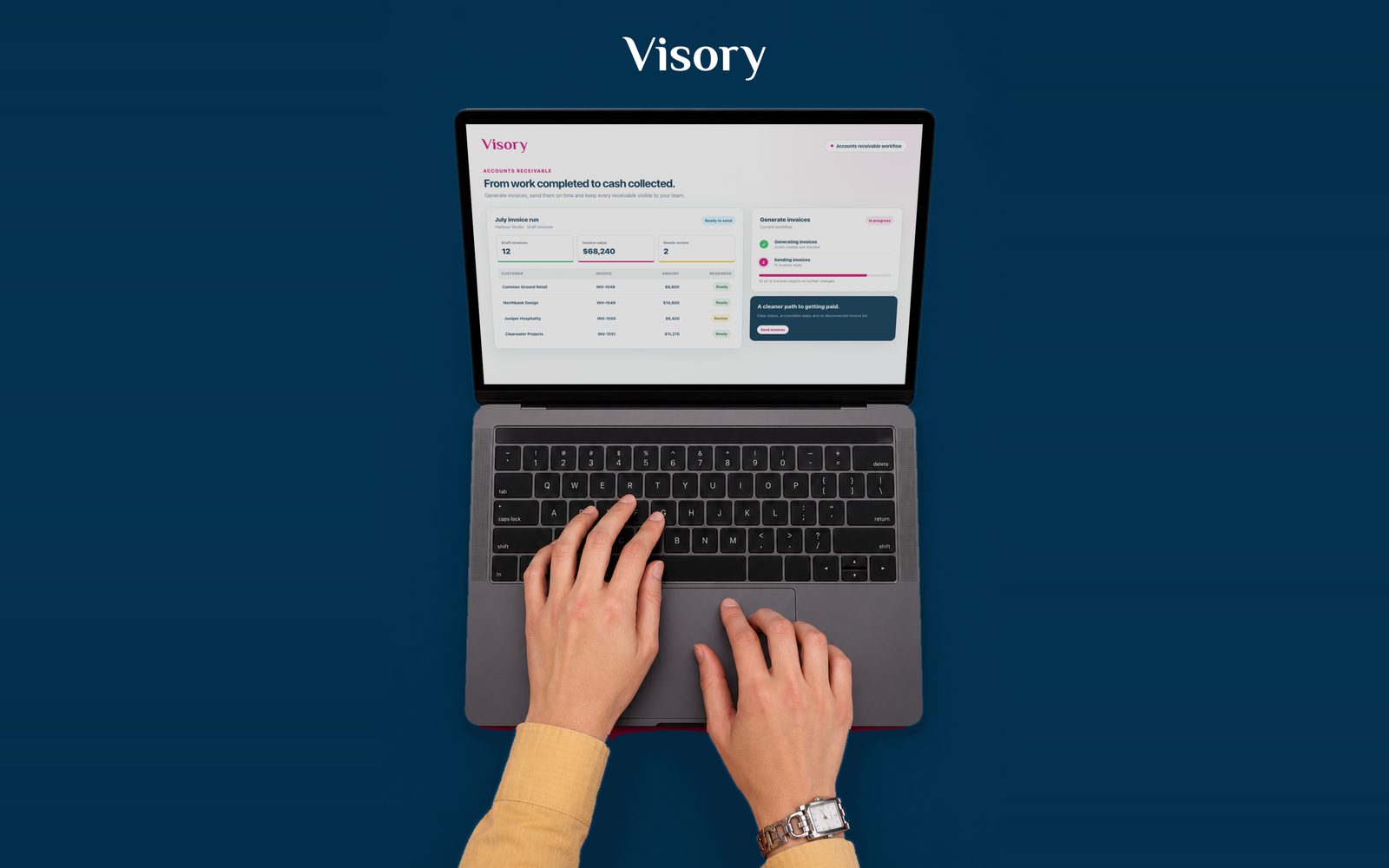
Invoices out on schedule, overdue accounts followed up in your name.
See accounts receivableVisory Insights
Once a month: what changed, what it means, and what to do next.
See how Insights worksBusiness Performance Partner
A named partner who walks you through the numbers and the next move.
How your partner worksVisory Insights
What your numbers should show in California.
Clean books are the start. Every month, Insights turns them into a plain-English report, and a named Business Performance Partner walks your leadership team through what they mean for the year ahead.
Exempt salaries rise $2,080 in January
An exempt employee must earn twice the state minimum wage for full-time work, so the threshold rises from $70,304 to $72,384 on January 1, 2027. A salaried employee between the two figures needs a raise of up to $2,080 or overtime pay. Insights flags them before the first 2027 payroll.
Unemployment costs land in the first quarter
At the 3.4% new-employer rate plus the 0.1% training tax, each employee costs up to $245 a year on the first $7,000 of wages, and for anyone paid more than $28,000 a year, all of it falls between January and March. Insights puts that into the cash flow forecast.
City wages cost more than the state floor
From July 1, 2026, a full-time employee in San Francisco is paid at least $19.61 an hour, $2.71 above the state rate, which is about $5,637 more a year at 2,080 hours. Insights prices each hire at the rate where the work is done.
Looking for a fractional CFO in California? Visory has no standalone CFO offer. That work sits inside Visory Insights and your sessions with a Business Performance Partner. See Visory Insights
What customers say
In a customer’s words.
“Visory ensures we have a clear view of who we need to pay and how that impacts cash flow so that there are no surprises.”
 Rachelle Harper Co-founder and COO, BrandBossHQ
Common questions
Questions California businesses ask.
Straight answers about bookkeeping for a California business, from a team that works remotely.
Does Visory have an office in California?
Visory’s US leadership team is in New York, and its teams work with growing businesses across the United States remotely, so we support businesses in California as we do everywhere else. A California business gets a dedicated team you know by name, who work inside your own QuickBooks or Xero file and meet you by video call. Your records stay in your file, which you can open at any time.
What hours does my Visory team work?
Your team works 9am to 5pm Eastern Time on business days, all year round. Outside those hours, the Visory platform is your 24/7 access point, so your financial information is there whenever you need it.
Can a bookkeeper outside my office look after a California business?
Yes. What matters is that the team knows California’s rules and works inside your own accounting file. Visory connects to your bank feeds and software, codes and reconciles transactions through the month with Delphi AI working under an expert team, and meets you by video call. Nothing about the work depends on where your office is.
How much does a bookkeeper cost in California?
Visory charges one flat monthly fee for the scope we agree, with no hourly billing and no timesheets. The fee reflects the services you take, from bookkeeping and payroll to accounts payable, accounts receivable, and Insights, and the volume of work in your business. After a discovery call, you get a clear proposal, so you know the monthly cost before you start.
See how pricing works Do you work in QuickBooks and Xero?
Yes. Visory works inside the systems you already use: QuickBooks and Xero for the ledger, Gusto and Rippling for pay runs, and Bill, Ramp, and Stripe for payments, along with your bank feeds. Your books stay in your own accounting file, which you own and can open at any time. Any change to your setup is agreed with you first.
Do California businesses charge sales tax on services?
Generally not on services alone. California taxes retail sales of tangible property, and labor or services that are part of that sale. Artwork transferred in tangible form is generally taxable, but work delivered only electronically is not. The statewide rate is 7.25%, and local taxes take it as high as 11.75%. This is general information; the California Department of Tax and Fee Administration sets the rules.
How is California income tax withheld from bonuses?
Bonuses and stock options may be withheld at a flat 10.23%, and other supplemental wages, such as commissions, overtime, and vacation pay, at 6.6%, without allowing for the employee’s withholding allowances. Regular wages use the 2026 withholding schedules. Your Payroll Specialist sets each payment type up once. This is general information; the Employment Development Department sets the rules.
How often do California businesses file sales tax returns?
When you get a seller’s permit, the California Department of Tax and Fee Administration tells you to file monthly, quarterly, quarterly prepay, fiscal annual, or annual returns, each due by the last day of the month after the period closes. A return is still filed when no tax is owed or there were no sales. A sale is reported in the period it is made, even if the customer pays later, so the books record it in that month. This is general information; the California Department of Tax and Fee Administration sets the rules.
Can you look after staff in more than one state?
Yes. Each state sets its own income tax withholding, unemployment insurance, minimum wage, and leave rules, and California withholds income tax from a nonresident who works in several states only on the share of working days spent in California. Visory keeps one set of books and runs payroll with each state’s rules applied, so every state’s cost shows in one monthly report.
Do you offer a fractional CFO in California?
A fractional CFO advises on numbers someone else produces. Visory runs the books, payroll, and payments, then delivers the insight from the same team: Visory Insights is a plain-English monthly report and a session with a named Business Performance Partner. There is no handover between the doing and the advising, and it comes on one flat monthly fee.
See how Visory Insights worksGetting started
Start with clarity, not a contract.
Three steps, in whatever rhythm suits you. Each one is useful on its own.
-

Book a discovery call
An obligation-free conversation about your goals and what you want the numbers to tell you.
Obligation-free -

Get your free financial health check
A senior member of the Visory team analyzes your financials and shows you where your finance function can improve. It is free, and it is your own numbers.
Free · your own numbers -
Receive a clear proposal
A clear commercial proposal for the scope we agree, on one flat monthly fee. No hourly billing. You decide whether to go ahead.
Flat monthly fee
Get started
The best is ahead for your business.
Start with a discovery call. We will listen first, then show you what your own numbers have been trying to tell you.
Sources (22) · rules last checked October 9, 2026
State income tax
Unemployment insurance
Minimum wage
- California Department of Industrial Relations: Minimum wage frequently asked questions
- California Department of Industrial Relations: Minimum wage increases to $16.90 on January 1, 2026
- California Department of Industrial Relations: Minimum wage set to increase to $17.40 on January 1, 2027
- California Legislative Information: Labor Code § 1182.12, minimum wage
Sales tax
- California CDTFA: Publication 73, Your California Seller’s Permit
- California CDTFA: Publication 37, Graphic Design, Printing, and Publishing
- California CDTFA: City and county sales and use tax rate information
- California CDTFA: California Sales and Use Tax Rates by County and City, operative October 1, 2026
Paid sick leave
Pay frequency
New hires
Disability insurance
Local rules
- San Francisco Office of Labor Standards Enforcement: Minimum Wage Ordinance
- San Francisco Office of Labor Standards Enforcement: Paid Sick Leave Ordinance
- San Francisco Office of Labor Standards Enforcement: Health Care Security Ordinance
- City of Los Angeles Office of Wage Standards: July 1, 2026 minimum wage rate increase
- City of Los Angeles Office of Wage Standards: Minimum wage and paid sick leave notice, 2026