
35% ▲ +3.0 pts since April
For hospitality groups
Know what every venue really made, every month.
We run your finance function. You get strategic insights. For US hospitality groups and franchise QSR operators, a dedicated team runs bookkeeping, payroll, accounts payable, and accounts receivable with Delphi AI under their oversight. Once a month, Visory Insights reads margin venue by venue and shows what to change.
- POS sales reconciled venue by venue, from the POS to the bank: card settlements, delivery payouts, and cash banked, so each venue’s revenue is clear each week.
- Every weekly pay run owned by a named Payroll Specialist, checked by Delphi AI before it is paid: the cash wage and tip credit for each role, reported tips, overtime, and withholding.
- Labor cost and cost of goods by venue every month, briefed by your Business Performance Partner, in plain English, with one move to make.

Who this is for
Built for groups where every venue runs its own week.
Several venues, one owner, and a pay run that changes with every schedule. That is the group Visory is built for.
- Two to twenty venues: cafes, restaurants, bars, taverns, or quick-service outlets, often each in its own company.
- Roughly $750k to $20m in revenue across the group, led by an owner, CEO, or president who answers for the result.
- A tipped workforce of servers, bartenders, and runners, paid weekly, with tip credits, tip pools, or both.
- A POS in every venue, supplier invoices every week, and the finance done after close by a part-time bookkeeper or an operations manager.
Anywhere in the United States. Venues in different cities and states report into one team, on one close timetable.
The pressure
Four rules set your labor cost and your revenue. You set none of them.
Tips pass between the guest, the employee, and the business, and federal and state rules decide who can count them, who can share them, and how they are reported. The state rules below use New York as the worked example; every state sets its own. The finance function is where a group sees what each rule costs each venue, or finds out at year-end.
The cash wage is only part of the pay.
Each tipped role’s hours, cash wage, and reported tips are checked on every run, so no one falls below the minimum wage and the credit taken is one the rules allow.
Set by FLSA section 3(m)(2)(A); New York minimum wage
Under federal law, an employer can pay a tipped employee, one who customarily and regularly receives more than $30 a month in tips, a cash wage of at least $2.13 an hour and count tips toward the rest of the minimum wage, but only if it tells the employee in advance how the tip credit works and makes up any shortfall. A state can set a higher floor. In New York, the minimum wage is $17.00 an hour in New York City, Long Island, and Westchester County and $16.00 in the rest of the state, and a tipped food service worker can be paid a cash wage of $11.35, or $10.70 outside those areas, with a tip credit of no more than $5.65, or $5.30. No tip credit is allowed for a day in which the worker spends more than two hours, or 20% of the shift, on non-tipped work.
29 U.S.C. 203(m)(2)(A) and 203(t); 29 CFR 531.50 and 531.59, as amended by 85 FR 86789, December 30, 2020; New York State Department of Labor, Your New York State Minimum Wage and Minimum Wage for Tipped Workers, rates in effect January 1, 2026 and unchanged on January 1, 2027.Sources DOL: Fact Sheet #15, tipped employees eCFR: 29 CFR 531.59 NYS DOL: Your New York State minimum wage NYS DOL: Minimum wage for tipped workers
Card tips have to reach the right people by payday.
Tips taken through the POS are reconciled to the pool and paid out in the same run, and a service charge is booked as the venue’s revenue, not as tips.
Set by FLSA section 3(m)(2)(B); 29 CFR 531.52 and 531.54
An employer may not keep any part of its employees’ tips, or let managers and supervisors keep them, whether or not it takes a tip credit. When it takes a tip credit, a mandatory tip pool can include only employees who customarily and regularly receive tips. When it pays the full minimum wage in cash, the pool can also include cooks, dishwashers, and other staff who are not tipped. An employer that collects and redistributes tips must pay them out in full no later than the regular payday for the workweek in which they were collected. A compulsory service charge is not a tip, even if it is paid to staff.
29 U.S.C. 203(m)(2)(B); 29 CFR 531.52(b), 531.54(b) to (d), and 531.55(a), as amended by 86 FR 52986, September 24, 2021; U.S. Department of Labor, Wage and Hour Division, Fact Sheet #15.Every tip report lands in payroll before the 10th.
Reported tips are recorded by employee and occupation on every run, so withholding is right through the year and the year-end forms come from the ledger.
Set by IRS Publication 15; Public Law 119-21; IRC section 45B
Employees report cash tips, including card tips, to the employer by the 10th of the month after they receive them, with no report needed for a month under $20. The employer withholds income tax and the employee share of social security and Medicare tax on reported tips and pays the employer share. Since 2025, employees can deduct up to $25,000 of qualified tips on their own returns through 2028, but tips are still generally subject to social security and Medicare tax, and the 2026 Form W-2 reports cash tips in box 12, code TP, with the Treasury Tipped Occupation Code in box 14b. A food or beverage employer can claim a credit for the employer social security and Medicare tax paid on tips above the amount needed to reach $5.15 an hour, the federal minimum wage on January 1, 2007.
Internal Revenue Service, Publication 15 (2026), section 6, Tips, page reviewed April 30, 2026; General Instructions for Forms W-2 and W-3 (2026), Deduction for qualified tips, box 12 code TP, and box 14b; Public Law 119-21, section 70201; Internal Revenue Code section 45B and Form 8846 (2025).Sources IRS: Publication 15 (2026) IRS: Instructions for Forms W-2 and W-3 IRS: Form 8846 (2025), PDF
The label on a charge changes the tax on it.
Each venue’s taxable sales, gratuities, and service charges are coded the way the bill shows them, so the return is prepared from the ledger, venue by venue.
Set by New York State Tax Law; Tax Bulletin ST-806
In New York, food or drink sold for consumption on the premises is taxable, hot or cold, and so is restaurant food sold to go, unless it is unheated and sold the way a grocery store would sell it. Voluntary tips are not subject to sales tax. A mandatory gratuity is untaxed only if it is shown separately on the bill, identified as a tip or gratuity, and paid in full to employees; other separately stated service charges are taxable. The combined rate is the state rate of 4% plus the local rate where the venue sits.
New York State Department of Taxation and Finance, Tax Bulletin ST-806, Sales by Restaurants, Taverns, and Similar Establishments, issued April 8, 2019, page updated February 24, 2026; Find sales tax rates.Sources NYS: Sales by restaurants (TB-ST-806) NYS: Find sales tax rates
Every instrument named here is listed with its effective date at the foot of this page.
What the owner sees each month
Four numbers for the group, with every venue behind them.
Sales, last quarter $2.25m ▲ 2% ahead of budget By venue, from POS sales reconciled to the bank
Labor cost, share of sales 35% ▲ 3 pts above the 32% target Wages, overtime, and employer payroll taxes, as a share of sales
Cost of goods, share of sales 29% Within the 28 to 30% range Food and beverage purchases, by venue
Cash across venues $410k Held · above the $300k floor The group’s bank balances after committed supplier runs
What did last Sunday cost each of your venues? Start with a discovery call. A senior member of the Visory team then runs the free financial health check on your own numbers, before anything is agreed.
Book a discovery callWhat we run for hospitality groups
From accurate processing to leadership confidence.
Visory Insights leads. The basics underneath it make it trustworthy and free your team for the work that matters, run by a dedicated team with Delphi AI under their oversight.Flat monthly fee. No hourly billing.
- 1 Accurate processing Bookkeeping and payroll done right, every month.
- 2 Clean, reliable data The foundation that makes reporting defensible.
- 3 Meaningful insights Cash, margin, and the year ahead, explained.
- 4 Leadership confidence You present numbers you trust. The plan gets backed.
The leading service
Visory Insights
Labor cost and cost of goods by venue, explained once a month with one move to make. A named partner who reads each venue’s numbers with you and helps decide where the next dollar goes.
See how Visory Insights works- Monthly plain-English report
- Structured session with your leadership team
- Twelve-month forward view of cash
- A named Business Performance Partner
The basics underneath it
Bookkeeping
Each venue’s POS sales, card settlements, delivery-platform payouts, and cash banked reconciled to the ledger, so revenue by venue is clear each week.
Explore bookkeepingPayroll
Weekly pay runs with the cash wage, tip credit, reported tips, and overtime for each role, and withholding and filings prepared from the same run.
See how payroll runsAccounts payable
Invoices from produce, meat, beverage, and liquor suppliers captured, coded to the venue, and paid when you say so, with price rises made visible.
See accounts payableAccounts receivable
Event deposits, catering invoices, and corporate accounts issued and followed up in your name.
See accounts receivableSchedules, tip pools, and inventory counts stay with your venues. Your managers schedule, set pool shares, and count inventory in the tools they already use, and Visory runs the pay run and the books from what those tools record. Whether a role can take a tip credit or join a pool is a decision for you and your advisors.
Visory Insights for hospitality groups
One month of Visory Insights, venue by venue.
Reports tell you what happened. Visory Insights tells you what it means, and what to do about it. Here is one month for Larkspur Hospitality, a fictional group of five venues in New York at about $9m in revenue with 140 staff.
Sales are holding. The gap is hours scheduled past what demand needed, most of them on Sundays. Three points of labor cost on $9m is $270k a year.
Hours scheduled past the sales forecast, this quarter 2,100 At Risk 1,500 hours past the 600 the scheduling model allows for training and events: Sunday shifts at the two cafes, and a second closing shift at the bar Monday to Thursday
Labor cost, share of sales Taking out those 1,500 hours is worth about $45,000 a quarter and moves labor cost two points back toward the 32% target
Schedule the cafes’ Sundays to the sales forecast, and drop the bar’s second closing shift Monday to Thursday. About 1,500 of the 2,100 hours. Hours by venue, day, and shift are prepared for your session.
≈ +$180k a year Insight session Accepted 9:00 to 9:45am · Video call  With your Business Performance Partner
Prepared by Delphi AI, briefed by your Business Performance Partner, in plain English, with every venue on its own line. No guesswork.
- Monthly plain-English report
- Structured insight sessions
- Labor cost and cost of goods, venue by venue
See your venues side by side. A discovery call is a conversation about your venues, your schedules, and what you want the monthly read to show you.
Book a discovery callFits your stack
Works with the tools you already use.
Your ledger and your payroll stay where they are. Visory connects to them and keeps the data flowing every day, so your team and Delphi are working from current numbers.
Accounting and books
Where your ledger and reporting live.


Payroll and people
Pay runs, payroll tax withholding and filings, and the people behind them.


POS, timesheets, and suppliers
Whichever POS each venue runs, its sales and card tips are matched to card settlements and your bank feeds. Your scheduling and timesheet tool feeds the pay run, and supplier invoices come in from email or your ordering platform.
Resources for hospitality groups
Content written for hospitality groups by the expert teams at Visory.



Common questions
Straight answers for hospitality groups.
The questions owners and operators ask before they hand Visory the finance function. The general ones are on the common questions page.
What cash wage can we pay tipped staff?
It depends on the state. Federal law sets a floor of $2.13 an hour in cash for a tipped employee, with tips counted toward the rest of the minimum wage, and many states set more. In New York, a tipped food service worker can be paid a cash wage of $11.35 an hour in New York City, Long Island, and Westchester County, or $10.70 in the rest of the state, against a minimum wage of $17.00 or $16.00. Your Payroll Specialist confirms the cash wage and tip credit for each role and venue before the first pay run. This is general information, not legal advice.
Can you run hospitality payroll with tips and tip credits?
Yes. Delphi AI prepares and checks each weekly run from your approved timesheets and tip reports, under your Payroll Specialist: cash wages, tip credits, reported tips, pool payouts, and overtime. In New York, overtime for tipped workers is paid at time and one-half the minimum wage, less the tip credit. You approve the run, it is paid, and withholding and filings are prepared from the same run. Each run keeps the records federal law asks for on tipped staff, including the tips each employee reported and the tip credit taken.
What should labor cost be as a percentage of sales?
There is no single right number. A cafe, a tavern, and a quick-service outlet carry different labor costs, and the same venue runs differently on a Sunday than on a Tuesday. Your Business Performance Partner sets a target with you for each venue, and Visory Insights reads every venue against its own target each month, so the conversation is about which shifts moved it.
Can you reconcile our POS sales to the bank?
Yes. Each venue’s POS sales are matched to card settlements, delivery-platform payouts net of their commission, and cash banked. Anything that does not match is raised with the venue while the day is still fresh, so sales in the ledger are the sales that reached the bank, and card tips are separated from sales before they reach payroll.
How do you handle supplier invoices across several venues?
Every invoice is captured, coded to the venue and to food, beverage, or supplies, and paid on the schedule you approve. Price rises show up as they land rather than at the inventory count, and cost of goods is reported by venue each month.
Is a service charge the same as a tip?
No. Under federal wage law, a compulsory charge for service is not a tip, even if the business pays it to staff, and the IRS does not count mandatory service charges as qualified tips. In New York, a mandatory gratuity escapes sales tax only if it is shown separately on the bill, identified as a tip or gratuity, and paid in full to employees; other separately stated service charges are taxable. Visory books each charge the way your bill presents it, so the revenue, the payroll, and the sales tax agree. This is general information, not legal or tax advice.
Each venue is its own company. Can you handle that?
Yes. Each company keeps its own ledger, its own payroll, and its own bank feeds, closed on the same timetable. Charges between venues, such as shared staff or a central kitchen, are recorded both ways, and the monthly read shows each venue on its own and the group as one.
What do we report for tips, and what changed in 2025?
Employees report their tips to you by the 10th of the following month, and you withhold income tax and their share of social security and Medicare tax on what they report. Under Public Law 119-21, employees can deduct up to $25,000 of qualified tips on their own returns for 2025 through 2028, but tips are still generally subject to social security and Medicare tax, and on the 2026 Form W-2 you report cash tips in box 12, code TP, and each employee’s Treasury Tipped Occupation Code in box 14b. A large food or beverage establishment also files Form 8027 each year, and the business may be able to claim the credit on Form 8846 for employer tax paid on tips. Visory keeps reported tips by employee and occupation on every run, so the year-end figures come from the ledger. This is general information, not tax advice.
How much does Visory cost?
Visory charges one flat monthly fee for the scope we agree. No timesheets, no hourly billing, no surprises. The fee reflects the services you take and the volume of work in your group, from the number of venues and the size of the weekly pay run to the invoices and payments each week, so you know the monthly cost before you start.
See how pricing works More questions, longer answers. Every question has its own link. See all common questions
General information for hospitality groups, not financial or tax advice.
Getting started
Start with clarity, not a contract.
Three steps, in whatever rhythm suits you. Each one is useful on its own.
-

Book a discovery call
An obligation-free conversation about your venues, your schedules, and what you want each venue’s numbers to tell you.
Obligation-free -

Get your free financial health check
A senior member of the Visory team analyzes your financials and shows where your finance function can improve. See the clarity before you commit to anything.
Free · your own numbers -
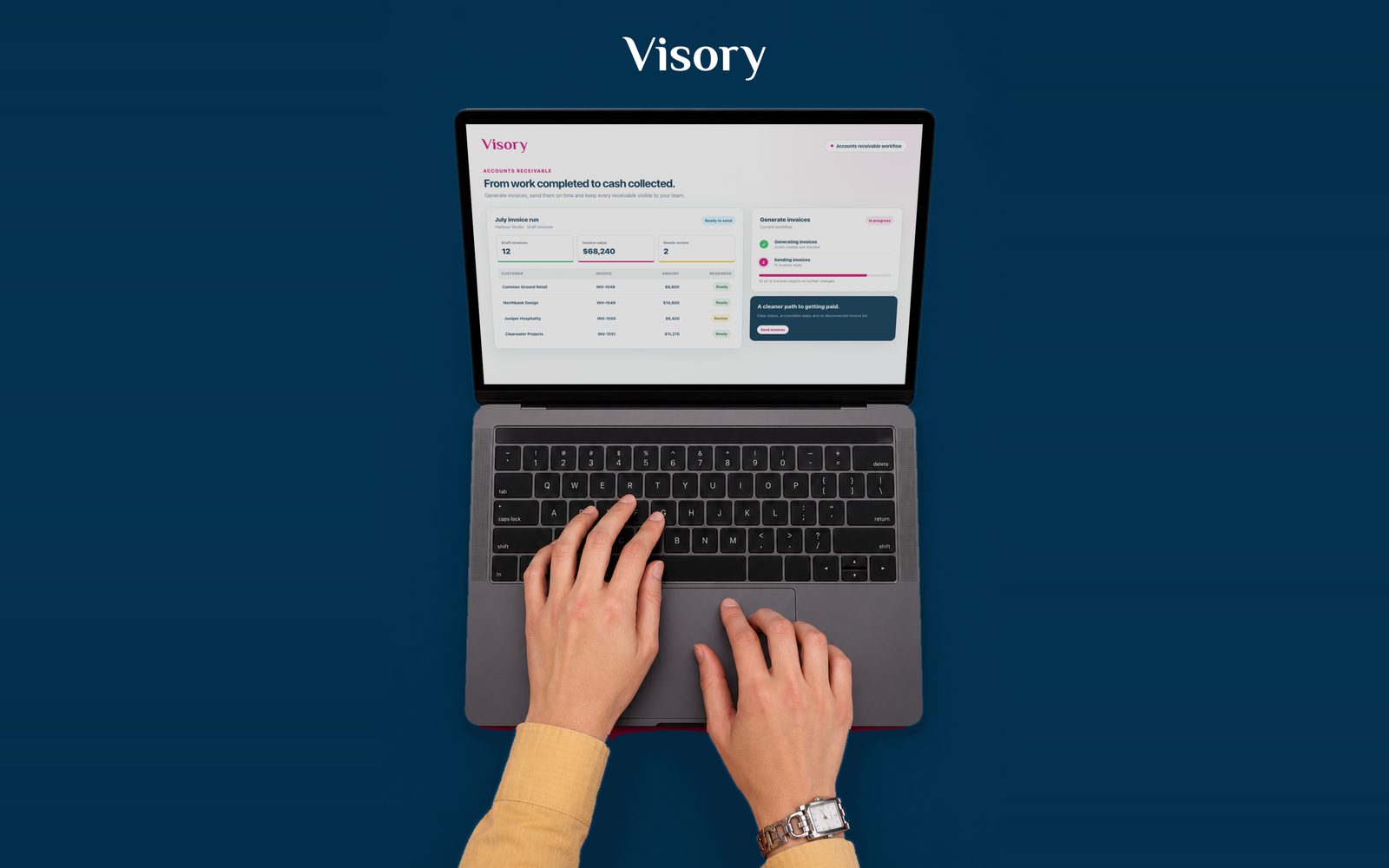
See how Visory works in practice
A walkthrough of the finance function and Insights working together on a group like yours. If it fits, we agree a flat monthly scope.
Flat monthly fee
Get started
Know what each venue made before the next schedule is set.
Start with a discovery call. Then a senior member of the Visory team analyzes your numbers, free of charge, and shows you where the finance function can improve.
Sources (6) · rules last checked October 9, 2026
- 29 U.S.C. 203(m)(2)(A), 203(m)(2)(B), and 203(t); 29 CFR 531.50, 531.52, 531.54, 531.55, and 531.59, as amended by 85 FR 86789, December 30, 2020, and 86 FR 52986, September 24, 2021; 29 CFR 516.28 (records for tipped employees); eCFR current to October 7, 2026.
- U.S. Department of Labor, Wage and Hour Division, Fact Sheet #15: Tipped Employees Under the Fair Labor Standards Act (cash wage of $2.13, maximum tip credit of $5.12 against the federal minimum wage of $7.25, notice, and tip pools).
- New York State Department of Labor, Your New York State Minimum Wage and Minimum Wage for Tipped Workers: $17.00 in New York City, Long Island, and Westchester County and $16.00 in the rest of the state; tipped food service workers $11.35 cash wage and $5.65 tip credit, or $10.70 and $5.30; no tip credit for a day with more than two hours, or 20% of the shift, of non-tipped work; rates in effect January 1, 2026 and unchanged on January 1, 2027.
- Internal Revenue Service, Publication 15 (2026), (Circular E), Employer’s Tax Guide, section 6, Tips, and Withholding on qualified tips (Public Law 119-21; transition relief for 2025 in Notice 2025-62), page reviewed April 30, 2026; General Instructions for Forms W-2 and W-3 (2026): box 12, code TP, and box 14b, Treasury Tipped Occupation Code(s).
- Internal Revenue Code section 45B; Internal Revenue Service, Form 8846 (2025), Credit for Employer Social Security and Medicare Taxes Paid on Certain Employee Tips ($5.15 an hour, the federal minimum wage on January 1, 2007, for food or beverage employers), and About Form 8846, page reviewed June 22, 2026; Publication 15 (2026), Allocated tips and Form 8027 (large food or beverage establishments).
- New York State Department of Taxation and Finance, Tax Bulletin ST-806, Sales by Restaurants, Taverns, and Similar Establishments, issued April 8, 2019, page updated February 24, 2026; Find sales tax rates (state rate 4% plus local rates), page updated September 24, 2019.