
9% ▼ 3.0 pts since April
For multi-site operators
Run every site on numbers you can compare.
We run your finance function. You get strategic insights. For US businesses that operate across several sites, from studio groups to hospitality groups, a dedicated team runs bookkeeping, payroll, accounts payable, and accounts receivable with Delphi AI under their oversight. Once a month, Visory Insights reads each site against the others and shows where to act next.
- A profit and loss for every site and one for the group, closed on the same timetable each month, with intercompany charges matched on both sides.
- One payroll across every entity, run by a named Payroll Specialist and checked by Delphi AI, whichever state or schedule each site runs on.
- Site against site, every month, briefed by your Business Performance Partner, with the one site to act on first.

Who this is for
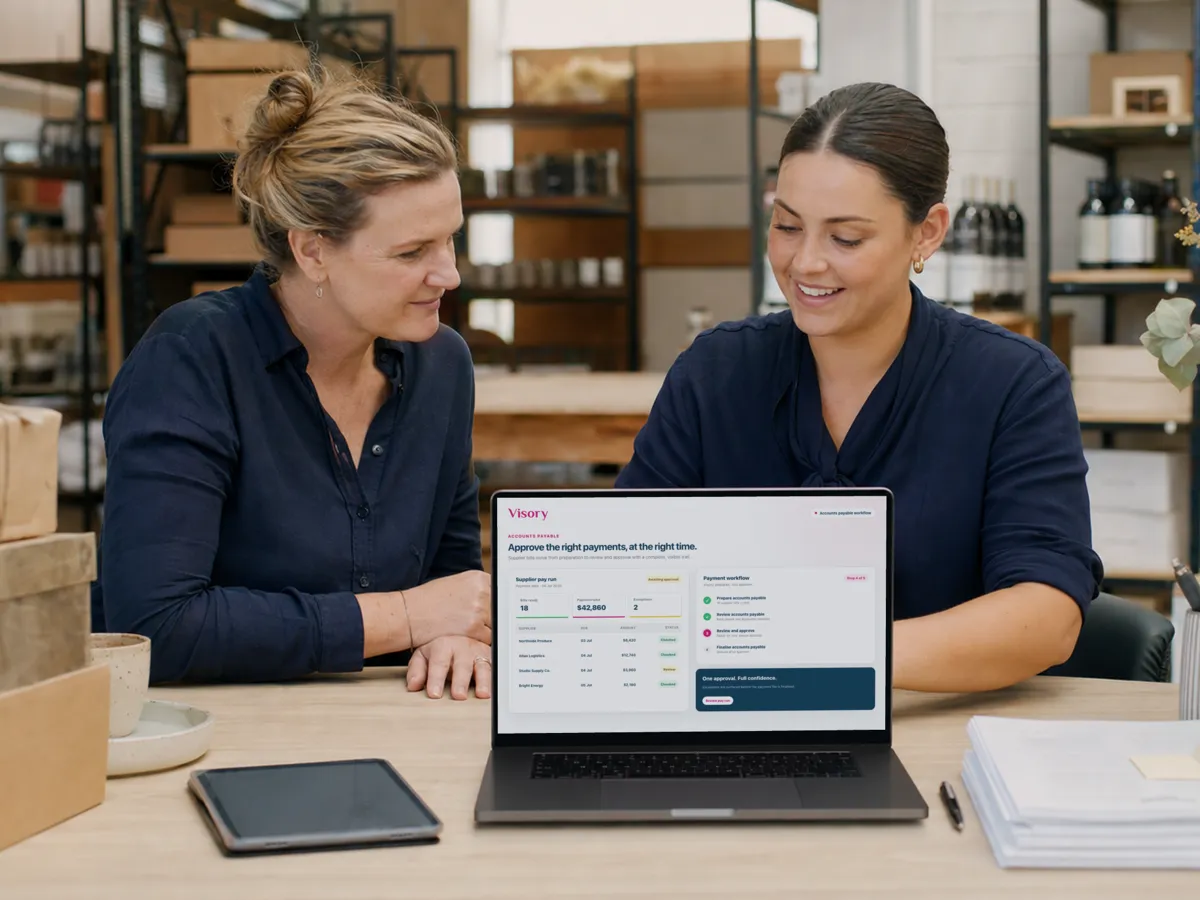
Built for owners who run several sites as one business.
If each site has its own entity, its own schedule, and its own sales, but you answer for the total, this is the finance function for it.
- Two to twenty sites, venues, or locations in retail, services, hospitality, health, child care, or fitness.
- Roughly $1m to $20m in revenue, led by an owner or CEO accountable for the whole group’s result.
- Several companies or LLCs, often one per site and a holding company, with staff on different pay schedules and sometimes in more than one state.
- Books kept entity by entity, with the group view rebuilt in a spreadsheet when someone asks for it.
Anywhere in the United States. Groups with sites in several states work with one team, on one monthly close.
The pressure
Four rules read your sites one by one, even when you run them as one business.
Each state taxes the wages earned in it and the sales made in it, and federal wage law counts every hour wherever it is worked. The state rules below use New York as the worked example; every state sets its own. The finance function is where the group gets seen whole.
A new site can mean a new state registration.
A manager who lives in one state and covers a site in another is withheld for each as the rules require, so every pay run records who worked where, entity by entity.
Set by New York State Tax Law; Publication NYS-50
In New York, all wages paid to a resident of the state are subject to New York State income tax withholding, even when earned outside the state, and all wages paid to a New York City resident are also subject to New York City income tax withholding. For a nonresident, tax is withheld on wages for services performed in New York, allocated by the days worked there. After getting a federal employer identification number, an employer registers with the state for unemployment insurance, withholding, and wage reporting, and reports each new hire within 20 days.
New York State Department of Taxation and Finance, Publication NYS-50, Employer’s Guide to Unemployment Insurance, Wage Reporting, and Withholding Tax, section 3, parts F, G, and I (page updated August 14, 2026); Hiring employees (page updated December 6, 2025).Two sites can charge two different rates.
Each location’s sales are coded to its own jurisdiction, so the sales tax return is prepared from books that already show what every site collected.
Set by New York State Tax Law; Tax Bulletin ST-360
In New York, a business must have a Certificate of Authority for each business location, displayed there, and may file one return for all locations or a separate return for each. The combined rate is the state rate of 4% plus any local rate imposed by a city, county, or school district, and an additional 0.375% applies within the Metropolitan Commuter Transportation District. New York’s sales tax is a destination tax: the point of delivery, or where possession passes to the customer, sets the rate.
New York State Department of Taxation and Finance, Tax Bulletin ST-360, How to Register for New York State Sales Tax, Multiple locations (issued September 2, 2011); Find sales tax rates (page updated September 24, 2019).Sources NYS: How to register for sales tax NYS: Find sales tax rates
Online and shipped sales are counted state by state.
When the group sells beyond its sites, sales are recorded by the state they are delivered to, so each state’s running total is in the books before a threshold is crossed.
Set by South Dakota v. Wayfair (2018); New York State Tax Law
On June 21, 2018, the Supreme Court’s ruling in South Dakota v. Wayfair eliminated the prohibition on a state requiring sales tax collection from a business with no physical presence in it. New York presumes a business is a vendor, and must register, when in the immediately preceding four sales tax quarters its gross receipts from sales of tangible personal property delivered into the state exceeded $500,000 and it made more than 100 such sales. Both conditions must be met. Each other state sets its own test.
South Dakota v. Wayfair, Inc., 585 U.S. 162 (2018), decided June 21, 2018; New York State Department of Taxation and Finance, Registration requirement for businesses with no physical presence in New York State.Sources Supreme Court: South Dakota v. Wayfair, docket 17-494 NYS: Businesses with no physical presence
Hours at two sites can make one overtime week.
An employee who covers two sites for the same employer has every hour in the workweek totaled, so timesheets from each site meet in one pay run.
Set by Fair Labor Standards Act; 29 CFR part 516
For each nonexempt employee, an employer keeps the hours worked each workday and the total hours worked each workweek, with straight-time pay, overtime premium, and total wages each pay period. Payroll records are kept for at least three years, and time cards and wage rate tables for at least two. Records may be kept at each place of employment or at a central recordkeeping office, where they must be made available within 72 hours of notice from the Wage and Hour Division.
29 CFR 516.2(a), 516.5, 516.6, and 516.7, under the Fair Labor Standards Act of 1938; 29 CFR 778.103, the workweek as the basis for overtime; eCFR current to October 7, 2026.Sources eCFR: 29 CFR 516.2 eCFR: 29 CFR 516.5 eCFR: 29 CFR 516.6 eCFR: 29 CFR 516.7 eCFR: 29 CFR 778.103
Every instrument named here is listed with its effective date at the foot of this page.
Which of your sites is carrying the others? Start with a discovery call. A senior member of the Visory team then runs the free financial health check on your own numbers, site by site, before anything is agreed.
Book a discovery callWhat we run for multi-site operators
From accurate processing to leadership confidence.
Visory Insights leads. The basics underneath it make it trustworthy and free your team for the work that matters, run by a dedicated team with Delphi AI under their oversight.Flat monthly fee. No hourly billing.
- 1 Accurate processing Bookkeeping and payroll done right, every month.
- 2 Clean, reliable data The foundation that makes reporting defensible.
- 3 Meaningful insights Cash, margin, and the year ahead, explained.
- 4 Leadership confidence You present numbers you trust. The plan gets backed.
The leading service
Visory Insights
Margin by site, against the other sites and the group, explained once a month with one move to make. A named partner who reads the whole group with you before the next site, lease, or hire is decided.
See how Visory Insights works- Monthly plain-English report
- Structured session with your leadership team
- Twelve-month forward view of cash
- A named Business Performance Partner
The basics underneath it
Bookkeeping
Each entity’s ledger on one chart of accounts, intercompany charges matched on both sides, and the group brought together every month.
Explore bookkeepingPayroll
One pay run across every entity, each employee paid by the right employer, with federal, state, and local withholding and filings prepared from the same run.
See how payroll runsAccounts payable
Supplier bills coded to the site that used them, shared costs split by a rule you agree, and paid when you say so.
See accounts payableAccounts receivable
Customers on account invoiced and followed up in your name, with what each site is owed in plain view.
See accounts receivableStructure and tax positions stay with your advisors. Choosing entities, deciding where to register for sales tax or withholding, and whether two entities jointly employ anyone are decisions Visory does not make or advise on. Visory keeps each entity’s books and pay records ready for them.
Visory Insights for multi-site operators
One insight, start to finish, across six sites.
Reports tell you what happened. Visory Insights tells you what it means, and what to do about it. Here is one month for Ridgeline Fitness, a fictional group of six studios in New York and New Jersey, each in its own company, at about $9m in revenue.
Five studios are holding their margin. Astoria, the newest, added classes faster than members joined. Three points of group margin on $9m is $270k a year.
Staff cost, Astoria studio 50% At Risk 15 points past the 35% the other five studios run at, driven by weekday midday classes that run under a third full
Operating margin, whole group Bringing Astoria’s staff cost to 35% of its $1.2m revenue is worth $180k a year, two points of group margin
Fold Astoria’s weekday midday classes from four into two, and move the studio onto the schedule the other five run. The revised timetable and schedule are prepared for your session.
≈ +$180k a year Insight session Accepted 9:00 to 9:45am · Video call  With your Business Performance Partner
Prepared by Delphi AI, briefed by your Business Performance Partner, in plain English, site by site and for the group as a whole.
- Monthly report for every site and the group
- Structured insight sessions
- Each site’s margin ranked against the others
See your sites side by side. A discovery call is a conversation about your entities, your sites, and what you want to compare each month.
Book a discovery callFits your stack
Works with the tools you already use.
Your ledger and your payroll stay where they are. Visory connects to them and keeps the data flowing every day, so your team and Delphi are working from current numbers.
Accounting and books
Where your ledger and reporting live.


Payroll and people
Pay runs, payroll tax withholding and filings, and the people behind them.


Point of sale, scheduling, and a ledger per entity
Sales from the point-of-sale or booking system each site runs are matched to your bank feeds. Your scheduling and time-tracking tools feed one pay run, and each entity keeps its own file in QuickBooks or Xero.
Resources for multi-site operators
Content written for multi-site operators by the expert teams at Visory.



Common questions
Straight answers for multi-site operators.
The questions multi-site owners ask before they hand Visory the finance function. The general ones are on the common questions page.
Can you consolidate the books across our entities?
Yes, as a management view. Each entity keeps its own file in QuickBooks or Xero, set up on one chart of accounts so the lines mean the same thing everywhere. Each month, intercompany balances are matched and taken out, and you get a profit and loss and balance sheet for the group with every site beside it. Formal consolidated financial statements, and any audit or review of them, are outside the service.
How do you handle intercompany transactions?
Management fees, recharges, and loans between entities are recorded on both sides as they happen and reconciled at every month-end, so the two ledgers agree. Shared costs such as head office wages, software, and insurance are split across sites by a rule you agree once, so every site carries its share the same way each month.
Can one payroll cover staff in several entities and states?
Yes. Every employee is paid by the entity that employs them, with federal, state, and local withholding worked out from where they live and where they work. Delphi AI prepares and checks the routine work from your scheduling and time data, your Payroll Specialist oversees it, and you approve it before it is paid. Staff who work for more than one entity have their hours recorded against the right employer.
Which state’s income tax do we withhold for staff who cross state lines?
It depends on where they live and where they work. In New York, for example, wages paid to a state resident are subject to New York withholding even when earned elsewhere, wages paid to a New York City resident are also subject to city withholding, and a nonresident is withheld on the share of wages for days worked in New York. Other states set their own rules. Visory records each employee’s home and work state on every run. Where you need to register is a question for your advisors. This is general information, not tax advice.
Do we need a sales tax registration for every location?
In New York, yes: a business needs a Certificate of Authority for each business location, and can file one return for all of them or one for each. Rates differ by location, because the state rate of 4% is combined with local rates, so each site’s sales are coded to its own jurisdiction. Sales tax filings are prepared from books that are already reconciled, so nothing is rebuilt at the deadline. This is general information, not tax advice.
Can we see profit by site when one entity runs several sites?
Yes. Every sale, bill, and wage is tagged to the site it belongs to, using locations or classes in QuickBooks or tracking categories in Xero, so one company running three venues still reports three results. Your Business Performance Partner reads them side by side each month and names the site to act on first.
What happens when we open or buy another site?
The new site is set up on the same chart of accounts, its staff are brought onto the same payroll under the right entity, and it appears in the next monthly report beside the others. If it sits in a new entity or a new state, it is added to the group view, and its registrations, once you have them, are set up in payroll and sales tax from its first month.
Do you work with our point-of-sale and scheduling systems?
Yes, whichever you run. Sales from each site’s point-of-sale or booking system are matched to the bank, and approved schedules and timesheets feed your payroll platform, such as Gusto. Your systems, your ledgers, and your payroll all stay where they are.
How much does Visory cost?
Visory charges one flat monthly fee for the scope we agree. No timesheets, no hourly billing, no surprises. The fee reflects the services you take and the volume of work across the group, from the number of entities and sites to the size of the pay run, so you know the monthly cost before you start.
See how pricing works More questions, longer answers. Every question has its own link. See all common questions
General information for multi-site operators, not financial or tax advice.
Getting started
Start with clarity, not a contract.
Three steps, in whatever rhythm suits you. Each one is useful on its own.
-

Book a discovery call
An obligation-free conversation about your sites, your entities, and what you want to compare each month.
Obligation-free -

Get your free financial health check
A senior member of the Visory team analyzes your financials and shows where your finance function can improve. See the clarity before you commit to anything.
Free · your own numbers -
See how Visory works in practice
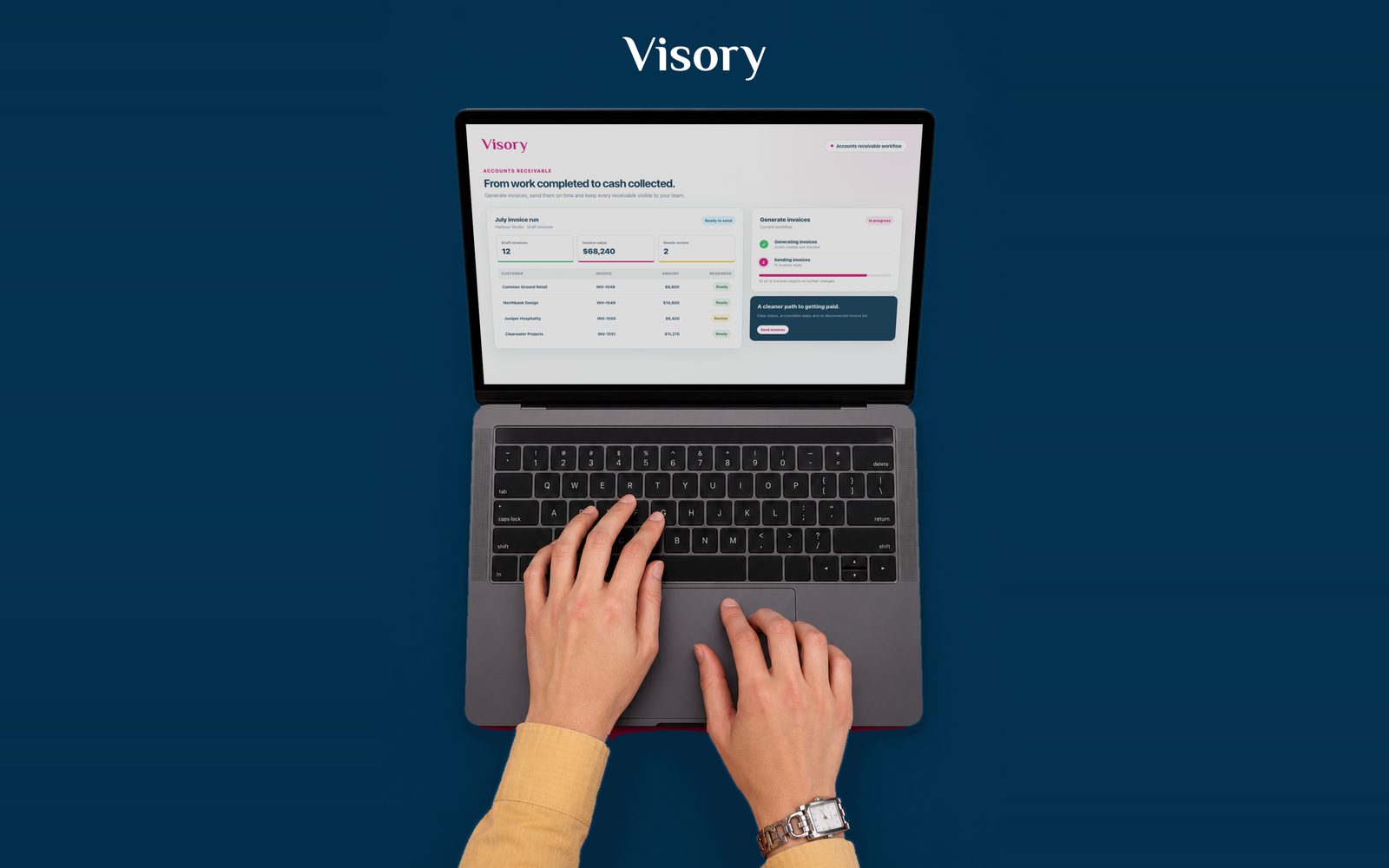
A walkthrough of the finance function and Insights on a multi-site group like yours, entity by entity. If it fits, we agree one flat monthly scope.
Flat monthly fee
Get started
See every site on the same page, every month.
Start with a discovery call. Then a senior member of the Visory team analyzes your numbers, site by site and free of charge, and shows you where the finance function can improve.
Sources (4) · rules last checked October 9, 2026
- New York State Department of Taxation and Finance, Publication NYS-50, Employer’s Guide to Unemployment Insurance, Wage Reporting, and Withholding Tax, section 3, parts F (New York State resident employees), G (New York City resident employees), and I (New York State nonresident employees), and registration on Form NYS-100, page updated August 14, 2026; Hiring employees (registration after an EIN, new-hire reporting within 20 days), page updated December 6, 2025.
- New York State Department of Taxation and Finance, Tax Bulletin ST-360, How to Register for New York State Sales Tax, Multiple locations (a Certificate of Authority for each business location), issued September 2, 2011; Find sales tax rates (state rate 4% plus local rates, 0.375% in the Metropolitan Commuter Transportation District, destination tax), page updated September 24, 2019.
- South Dakota v. Wayfair, Inc., 585 U.S. 162 (2018), decided June 21, 2018; New York State Department of Taxation and Finance, Registration requirement for businesses with no physical presence in New York State ($500,000 and more than 100 sales of tangible personal property delivered into the state in the immediately preceding four sales tax quarters, effective June 21, 2018).
- 29 CFR 516.2(a) (items required, including hours worked each workday and each workweek), 516.5 (records preserved three years), 516.6 (supplementary records preserved two years), and 516.7 (place of records; available within 72 hours of notice), source 52 FR 24896, July 1, 1987, as amended; 29 CFR 778.103 (all hours worked in the workweek totaled); Fair Labor Standards Act of 1938; eCFR current to October 7, 2026.