
Short answer
The bookkeeping mistakes we see startups make are mixing personal and business spending, putting the books off, keeping disorganized records, hiring an inexperienced bookkeeper, not reading the financial statements, overlooking deductions, and missing IRS filing deadlines. A separate business bank account, records kept as you go, and books closed every month help you avoid them, so tax returns and estimated tax payments rest on current numbers.
Running a startup? Then you know as well as we do that there are about 100 different things to get done each day. You’re trying to attract new customers, secure funding, and keep your service delivery, all with a skeleton crew.
So who could blame you for letting your books fall by the wayside? As it turns out, your future self.
In this guide, we share the most common bookkeeping mistakes we see business owners make every year and, more importantly, how to avoid these costly errors.
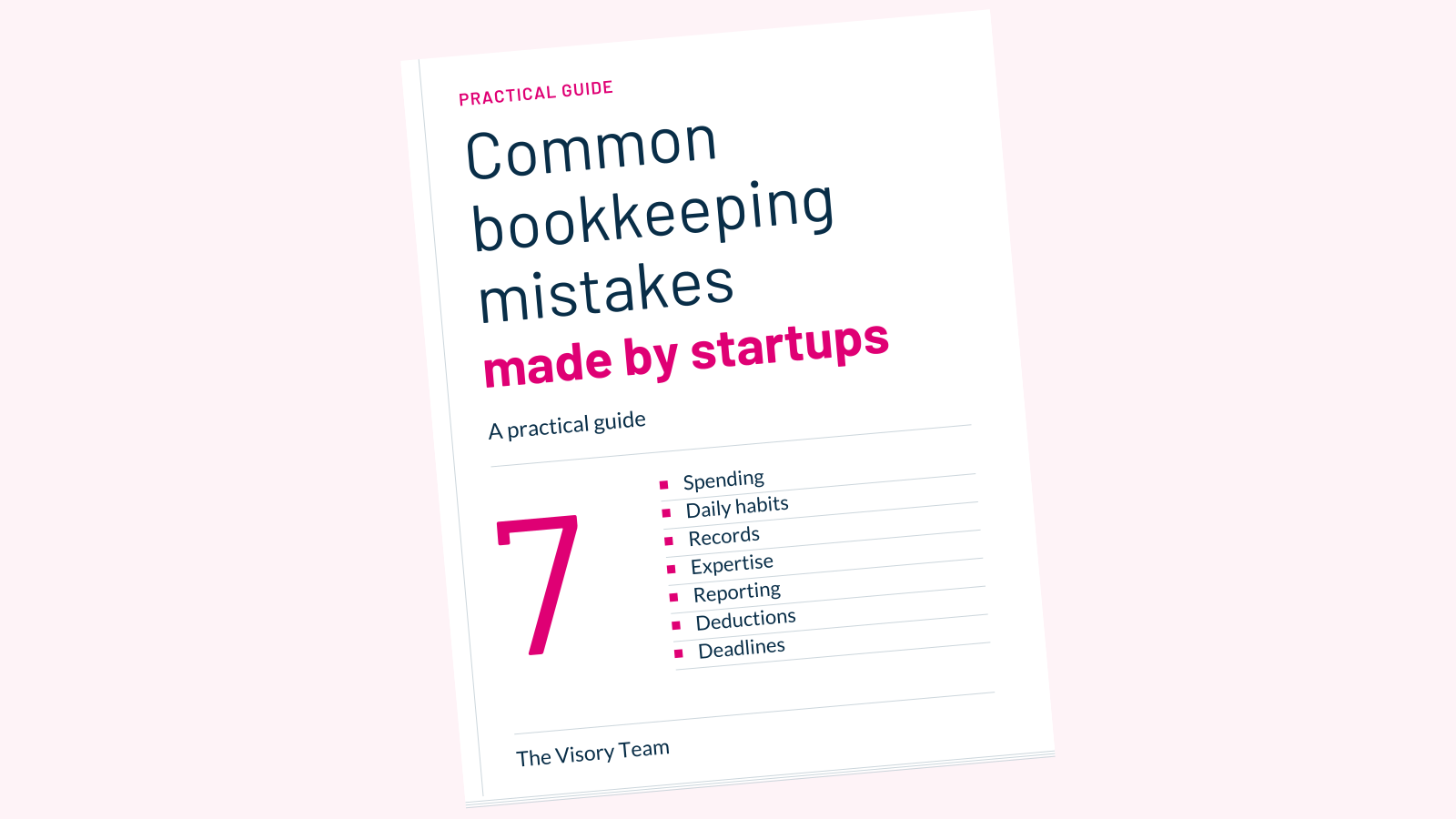
7 bookkeeping mistakes you don’t want to make
-
Mixing personal and business spending
-
Continuing to put it off until you can’t stand it anymore
-
Disorganized record keeping
-
Hiring an inexperienced bookkeeper
-
Not fully understanding or reading your financial statements
-
Overlooking tax deductions
-
Missing filing deadlines because the books weren’t done on time
Seven bookkeeping mistakes you don’t want to make
As a bookkeeping team for startups and scale-ups, we’ve seen the same bookkeeping mistakes made over and over again. Whether you’re scaling a software business or running a services company, there are some foundational best practices that protect your company in the long run.
While avoiding these common financial mistakes might seem small, from our experience, they have a tendency to snowball. Let’s dig in.
1. Mixing personal and business spending
As a solo founder, you may end up spending your own money to get the company up and running. This is extremely common for a growing business. There is nothing wrong with this initially, but things get messy fast if you commingle your personal and business funds in the long run.
Everything from swiping your personal credit card to pay for a software subscription to paying office rent could bite you later, and here’s why: commingling personal and business money makes for a confusing tax situation, and a business owner can get flagged if their returns aren’t accurate. Mixing your personal and business accounts makes things messy, and even with an adviser you trust, you’ll still spend hours separating out your expenses.
The IRS puts it plainly: one of the first things you should do when you start a business is open a business checking account, keep it separate from your personal account, and use it for business purposes only.1
Having a separate business bank account has a number of benefits, including:
- Making it easier to track and categorize your business expenses.
- Allowing you to create internal reports, like balance sheets and profit and loss statements, without pulling in personal expenses by accident.
- Ensuring you will have all the information you need to file your business taxes. You need documented proof of your expenses and income come tax time.
To separate your personal and business money, we recommend that you take these three steps:
- Open a separate business bank account with a business debit card.
- Have a business credit card that you pay off with business funds.
- Come up with a way to make sure you don’t confuse business and personal cards. Get a card from a new bank or in a totally different color scheme so you never grab the wrong card by mistake.

2. Continuing to put it off until you can’t stand it anymore
Like going to the dentist, many startups put off their bookkeeping until it hurts. It’s tempting, but it’s not worth it. Your startup needs accounting processes in place as soon as possible.
If you put off bookkeeping until you can’t avoid it anymore, several things are likely to happen.
- You will end up paying someone to do catch-up bookkeeping. This type of bookkeeping requires someone to go back through old records, try to dig up ancient receipts, and piece together your finances with missing data. It’s better to maintain bookkeeping records as you go than try to catch up months later.
- You will have missing receipts and invoices. Over time, documents get lost. Emails get deleted. You forget things. Putting off bookkeeping is bound to make the inevitable reckoning more stressful.
- You will hate the bank reconciliation process. Reconciling your bank account with your internal records should be done monthly. Imagine having to do 12 or more months at once. No thank you.
- You may not have all necessary tax documents. The IRS expects you to keep the documents that support the entries in your books and on your tax return.1 If you put off bookkeeping for too long, you may miss out on deductions because you didn’t document your spending accurately.
- You could find a mistake long after it happened. One mistake can lead to another, which leads to another, which, well, you understand. A simple accounting error could become a major headache. You want to catch errors fast.

3. Disorganized record keeping
Startups often have an organization problem. It’s understandable, given how depleted your energy and limited your resources are. Many startups have just a handful of employees, and receipts get put into a folder until someone takes the time to sort them.
However, you will likely live to regret this way of operating. Disorganized record keeping could lead to lost documents, unpaid bills, and missing reports. If your supplier cuts you off because you don’t have an accounts payable process and you never settled your last invoice, you will wish you had set one up sooner.
4. Hiring an inexperienced bookkeeper
Hiring an inexperienced bookkeeper may not be as bad as having no bookkeeper, but it certainly creates its own issues. An experienced bookkeeper, one with real experience working with early-stage companies, has several distinct advantages for a startup (instead of asking your cousin who is kind of good at math).
An experienced bookkeeper, who has worked with startups in your industry, will be better at:
- Keeping the numbers current for estimated tax. Tax must be paid as you earn income during the year, through withholding or estimated tax payments, and the IRS splits the year into four payment periods.3 Some startups may not owe enough to need them at first, but up-to-date books make each payment easier to work out.
- Running payroll records that line up with your payroll tax filings. Employers report the federal income, Social Security, and Medicare taxes withheld from employees’ pay, and their own share of Social Security and Medicare, on Form 941 each quarter.4
- Setting up your accounting software and structures. An inexperienced bookkeeper may not be up to date on the most modern software tools or know how to set up a secure structure for your financial documents and accounts.

5. Not fully understanding or reading your financial statements
Financial data without analysis is just numbers on a page. If you don’t understand how to interpret your financial reports, you could make bad decisions. Worse, you may not know what essential reports you need to create for your business. Having the right documents on hand allows you to draw thoughtful insights and make informed decisions.
Some startups have the right reports being created, but they ignore them. This could mean you miss a financial error or don’t realize you’re falling into debt. It’s not just important that you generate reports, it’s also important to analyze them for insights.

Here are some of the things you should understand about your financial statements. If you’re not sure how to read them, it’s time to call in reinforcements.
- Reading a balance sheet. Your balance sheet tracks your assets, liabilities, and equity (including owner equity). Your assets are equal to your liabilities plus your equity. The two sides of the report should even out.
- Reconciling bank statements. Your bank balance and reported transactions should match what your internal reports say you’ve been spending. You or your bookkeeper should check monthly to see if there are discrepancies, such as missing money you can’t account for.
- Looking over profit and loss statements. Also called an income statement, this important document can tell you how much you spent and how much you earned in a particular time period. You should be able to analyze it and understand if you are overspending or if you have redundant expenditures.
- Reading your accounts receivable and accounts payable reports. Accounts receivable tracks what your customers owe you, and accounts payable tracks what you owe your suppliers. You should be able to understand how to track these reports and what the process is to make sure you get paid on time and pay your bills on time.

6. Overlooking tax deductions
Tax deductions are expenses you paid for your business that can offset your tax burden. In other words, by deducting business expenses, you may lower your tax bill. Overlooking deductions is often an expensive mistake.
Tax deductions can get complicated. From claiming the wrong items to missing a deduction or timeline, you could wind up paying more tax than you need to. There are three rules worth keeping in mind when looking for tax deductions.
- The expense must be ordinary and necessary. The IRS describes an ordinary expense as one that is common and accepted in your field of business, and a necessary expense as one that is helpful and appropriate for your business.2
- When an expense is partly for business and partly personal, you separate the personal part from the business part, and the personal part is generally not deductible.2 If you use a car for both, you divide its expenses between business and personal use, for example by the miles driven for each, and you can deduct only the business share.5
- You must have records to prove where your expenses went. It’s not enough to tell the IRS your startup spent $5,000 on new laptops. You must have the receipts, because your records support the entries in your books and on your tax return.1 Document, document, document.

7. Missing filing deadlines because the books weren’t done on time
The IRS sets a due date for every return, and the dates depend on the type of business. A partnership’s Form 1065, for example, is due on the 15th day of the 3rd month after the end of its tax year, and an individual’s Form 1040 on the 15th day of the 4th month. The IRS publishes them all in its tax calendars.6
Filing late is expensive. The failure to file penalty is 5% of the tax due for each month or part of a month the return is late, up to a maximum of 25%, and a return more than 60 days late carries a minimum penalty.7
In addition to your annual return, keep in mind that you may owe estimated tax payments and quarterly payroll returns during the year, and most investors will want periodic reports about your financial health. The more organized you are with your monthly bookkeeping, the easier it is to pull these reports and file on time.
The main takeaways
Between conversations with investors, validating your idea, winning new customers, building your team, and reviewing term sheets, running a startup is a tricky balancing act. In our experience, it’s easy to see why some companies don’t collect the financial data they should, and often ignore data when they should analyze it. There is a lot to get done and only so much time in the day. A lot of problems boil down to overwhelmed small businesses not having the time or expertise to take care of their books properly.
If you are struggling to keep accurate books, Visory can help. A dedicated team you know by name runs your bookkeeping every month, and your Business Performance Partner walks you through what the numbers mean, long before you are ready for a CFO.
Sources
- Internal Revenue Service, Publication 583, Starting a Business and Keeping Records.
- Internal Revenue Service, Publication 334, Tax Guide for Small Business.
- Internal Revenue Service, Estimated taxes.
- Internal Revenue Service, About Form 941, Employer’s Quarterly Federal Tax Return.
- Internal Revenue Service, Publication 463, Travel, Gift, and Car Expenses.
- Internal Revenue Service, Publication 509, Tax Calendars.
- Internal Revenue Service, Failure to file penalty.
About this guide
Written by The Visory Team. Published . General information for US businesses, not advice for your situation.